Authors: Han CHEN丨Hao WU[1]
Introduction
Since 2026, China has witnessed significant developments in the regulatory framework governing outbound investment by individuals. For Chinese high-net-worth individuals ("HNWIs"), cross-border investment has entered a new era in which tax compliance has become an integral component of wealth planning and global asset allocation.
Several recent developments illustrate this trend.
First, at the legislative level, the Regulations of the State Council on Outbound Investment (《国务院关于对外投资的规定》, State Council Order No. 837) came into effect on 1 July 2026. As China's first administrative regulation specifically governing outbound investment, the Regulations expressly include PRC individual residents within the regulatory framework, marking the first time that outbound investment activities conducted by individuals have been systematically incorporated into a unified national regulatory regime.
Second, at the regulatory level, in May 2026, with the approval of the State Council, eight government authorities – including the China Securities Regulatory Commission ("CSRC") – jointly issued the Implementation Plan for the Comprehensive Rectification of Illegal Cross-border Securities, Futures and Fund Business Activities (《综合整治非法跨境证券期货基金经营活动实施方案》). The Plan further strengthens regulatory oversight over cross-border capital flows and offshore investment channels, reinforcing the policy direction that Chinese investors should conduct overseas securities and financial investments through compliant and legitimate channels.
Third, the CRS 2.0 regime is being rolled out from 2026 in major offshore jurisdictions including the British Virgin Islands and the Cayman Islands, and is expected to extend to Singapore, Hong Kong SAR and other jurisdictions within the next two to three years. Compared with CRS 1.0, the new round of information exchange significantly expands account coverage and deepens beneficial-owner look-through, and compliant reporting of offshore income is fast becoming a routine obligation for resident individuals.
Against this backdrop, the era in which offshore assets were perceived as being beyond the visibility of tax authorities has effectively come to an end. For Chinese HNWIs, the principal challenge of cross-border tax planning is no longer simply how to establish an offshore structure, but increasingly how to explain that structure, substantiate the underlying tax treatment, and maintain ongoing compliance with tax reporting and payment obligations.
To assist individual investors in navigating this evolving compliance landscape, we are launching a series of articles on Individual Outbound Investment Tax Compliance. The series focuses on three of the most representative categories of Chinese individual investors:
entrepreneurs who hold domestic and offshore assets through offshore holding structures;
multinational executives who work across jurisdictions and receive remuneration from multiple countries; and
globally mobile individuals who have relocated overseas while maintaining Chinese nationality and significant economic connections with China.
Building on these representative scenarios, the series will examine a number of key tax compliance topics, including:
Part I – Key Tax Considerations for Three Types of Investors
Part II – CRS 2.0 and Beneficial Ownership Registers for Offshore Companies
Part III – Resolving Dual Tax Residency
Part IV – Tax Compliance for Red-chip and Other Offshore Structures
Part V – Tax Challenges for Family Trusts and Family Offices
*******
As the opening article of this series, this publication provides an overview of the principal tax compliance issues that may arise for the three representative categories of Chinese HNWIs in connection with outbound investment and global asset allocation. Subsequent articles will examine each of these topics in greater detail.
This article is not intended to provide definitive conclusions as to how the hypothetical individuals described below should report their income or determine their tax liabilities. In practice, the tax treatment of cross-border investment structures depends on numerous factors, including the tax residency status of family members, the ownership and control of investment structures, the legal characterisation of various types of income, and the specific facts and circumstances of each case.
Instead, the purpose of this article is to assist readers in identifying potential tax compliance obligations and recognising areas that warrant particular attention, thereby facilitating more informed and proactive cross-border tax risk management.
Mr. A – A Chinese Entrepreneur with an Offshore Holding Structure
Background
Mr. A is a successful entrepreneur.
He and his family are Chinese nationals holding PRC passports. Their household registration (hukou) remains in Beijing, and they do not possess citizenship or permanent residency in any other jurisdiction. The family resides in Beijing on a long-term basis, although Mr. A travels overseas regularly for business purposes.
Several years ago, Mr. A established an offshore family trust as settlor, with his family members designated as beneficiaries. The trust holds part of the equity interests in a pre-IPO company founded by Mr. A. In addition, the trust owns a British Virgin Islands ("BVI") company through which a diversified portfolio of offshore financial investments is maintained.
Separately, Mr. A personally owns another BVI company that has completed the foreign exchange registration required under SAFE Circular 37.
Mr. A's wealth is highly concentrated in corporate equity and is held through a combination of offshore companies and trust structures. His objectives include business expansion, capital operations and intergenerational wealth succession. He therefore represents a typical example of a Chinese entrepreneur who owns both domestic and offshore assets through sophisticated offshore holding structures.
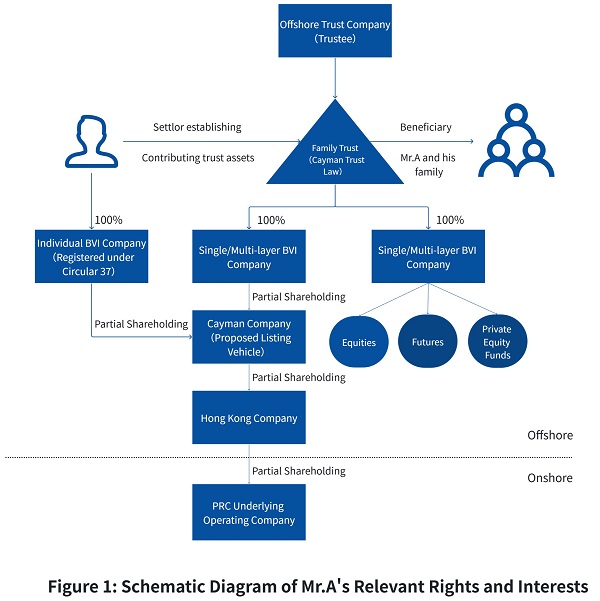
Depending on the specific facts and circumstances, Mr. A may encounter a number of significant tax compliance issues, including the following.
I. Taxation of Dividends Distributed by Offshore Companies
Where Mr. A's personally owned BVI company distributes dividends to him, and Mr. A is regarded as a PRC tax resident under the Individual Income Tax Law, such dividends may constitute overseas investment income subject to PRC individual income tax ("IIT"). Under the current PRC tax rules, dividend income derived from offshore companies is generally subject to IIT at a rate of 20%.
II. Controlled Foreign Corporation (CFC) Rules and Deemed Dividend Taxation
Instead of distributing profits, Mr. A's BVI company may retain earnings generated from dividends received from the pre-IPO company, gains realised from equity disposals, or other investment income.
Where such profits are accumulated offshore without reasonable commercial justification, the Controlled Foreign Corporation ("CFC") rules under the PRC Individual Income Tax Law may become relevant. Under these rules, the undistributed profits of a foreign company may, in certain circumstances, be treated as deemed dividends distributed to a PRC tax resident individual shareholder, notwithstanding that no actual dividend distribution has occurred. If the CFC rules apply, Mr. A may be required to pay PRC IIT at a rate of 20% on the deemed dividend.
Whether the CFC rules are triggered depends on numerous factors, including the ownership structure, the level of control exercised by PRC tax residents, the commercial rationale for profit retention, and the availability of statutory exemptions.
III. Indirect Transfer of Taxable Chinese Property
If an offshore company within the trust structure disposes of equity interests that directly or indirectly derive their value from the pre-IPO company, the transaction may constitute an indirect transfer of taxable Chinese property.
Such transactions may fall within the scope of the Announcement of the State Taxation Administration on Certain Enterprise Income Tax Matters Regarding Indirect Transfers of Property by Non-resident Enterprises (STA Announcement [2015] No. 7).
Where the relevant conditions are satisfied, the transfer may be subject to PRC enterprise income tax at 10%, notwithstanding that the transaction takes place entirely outside China.
The tax treatment of indirect transfers is highly fact-dependent and generally requires a comprehensive analysis of the transaction structure, commercial purpose and applicable safe harbour provisions.
IV. Offshore Companies Being Treated as PRC Tax Resident Enterprises
Under the PRC Enterprise Income Tax Law, an enterprise established outside China may nevertheless be regarded as a PRC tax resident enterprise if its place of effective management is located within China.
Accordingly, whether it is Mr. A's personally held BVI company or an offshore company owned through the family trust, there is a possibility that the relevant entity could be regarded as a PRC tax resident enterprise if its strategic, operational and financial management is effectively exercised from China.
If so, the company may become subject to PRC enterprise income tax on its worldwide income, including dividends received from the pre-IPO company, gains realised upon future exits, and other offshore investment income. The applicable enterprise income tax rate would generally be 25%.
Whether the place of effective management is located in China requires a detailed analysis of the company's governance arrangements, decision-making processes and day-to-day management activities.
V. Tax Issues Relating to Offshore Family Trusts
China has not yet enacted a comprehensive trust tax regime. As a result, the PRC tax treatment of offshore family trusts remains subject to considerable uncertainty.
Based on the current PRC tax framework and existing enforcement practice, a number of tax issues may arise, including:
whether the trust could be disregarded for PRC tax purposes where the settlor retains an excessive degree of control;
whether tax liabilities may arise before or upon the injection of assets into the trust;
how income earned by the trust should be attributed for PRC tax purposes;
whether companies held by the trust could be subject to the PRC CFC rules;
whether trust distributions could be characterised as taxable investment income or capital gains.
In the absence of specific trust taxation legislation, many of these issues remain legally uncertain and continue to be the subject of academic discussion and practical debate.
Key Takeaways for Mr. A
Mr. A's case illustrates the tax compliance challenges commonly associated with sophisticated offshore holding structures involving multiple layers of companies and trusts.
The issues identified above generally arise from the interaction of PRC domestic tax rules, international tax principles, and the legal regimes of offshore jurisdictions. Whether, and to what extent, these arrangements give rise to actual tax liabilities depends on a detailed analysis of the relevant facts, including tax residency status, control over offshore structures, characterisation of income, and the historical execution of transactions.
Accordingly, the tax consequences of such structures cannot be determined in abstract terms and must be assessed on a case-by-case basis.
Ms. B – A Multinational Executive with Cross-border Employment
Background
Ms. B is a senior executive of a multinational group responsible for the group's operations in China.
She and her family are Chinese nationals holding PRC passports and reside in Shanghai on a long-term basis. She does not hold citizenship or permanent residency in any other jurisdiction.
Ms. B has entered into separate employment agreements with the group's PRC subsidiary and its US parent company. She receives remuneration from both employers and participates in the group's equity incentive programme in the form of restricted stock units ("RSUs") granted by the US parent company. Some of the RSUs have already vested and are held in an overseas brokerage account.
Due to business requirements, Ms. B travels frequently to the United States. In certain years, her cumulative stay in the US exceeds 183 days.
Compared with Mr. A, Ms. B's asset structure is relatively straightforward. Her principal tax challenges arise from cross-border employment, tax residency determination and the coordination of tax obligations across multiple jurisdictions. She therefore represents a typical multinational executive receiving employment income from more than one jurisdiction.
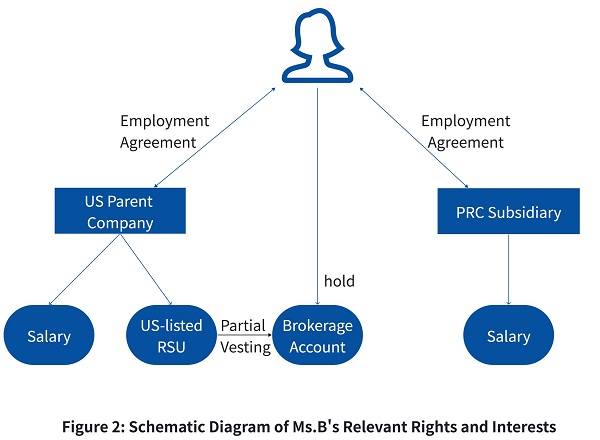
Depending on the particular facts and circumstances, Ms. B may face the following key tax compliance issues.
I. Dual Tax Residency
Although Ms. B's family life and primary employment are centred in Mainland China, her work requires her to spend substantial periods of time in the United States. In certain years, her cumulative presence in the US exceeds 183 days.
Under these circumstances, Ms. B may be regarded as a tax resident by both China and the United States under their respective domestic tax laws. If dual tax residency arises, both jurisdictions may, in principle, assert taxing rights over her worldwide income.
In practice, where appropriate, Ms. B may consider filing Form 1040NR together with Form 8833 (Treaty-Based Return Position Disclosure) in the United States to claim treaty benefits and take the position that she should be treated as a non-US tax resident under the applicable income tax treaty.
Whether such treaty relief is available depends on the tie-breaker provisions of the relevant tax treaty and an analysis of Ms. B's particular facts and circumstances.
II. Foreign Tax Credit
If Ms. B is regarded as a PRC tax resident under the applicable tax treaty, employment income earned in the United States and taxed there will generally remain subject to PRC individual income tax as part of her worldwide income.
To alleviate double taxation, she may claim a foreign tax credit in China for eligible income taxes paid in the United States, subject to the limitations and requirements prescribed under PRC tax law.
In practice, however, claiming a foreign tax credit often involves a number of technical issues, including: the calculation of the foreign tax credit limitation, and the preparation of supporting documentation, such as foreign tax returns and tax payment certificates.
Experience shows that taxpayers frequently fail to obtain the full benefit of available foreign tax credits due to insufficient documentation or procedural deficiencies.
III. Permanent Establishment (PE) Risk
As Ms. B is simultaneously employed by both the PRC subsidiary and the US parent company, her cross-border employment arrangements may also create permanent establishment ("PE") risks for either employer.
For example, where Ms. B performs services in China on behalf of the US parent company and has the authority to negotiate or conclude contracts in the name of the US employer – and habitually exercises such authority – the activities may give rise to a dependent agent permanent establishment in China under the applicable tax treaty.
Conversely, similar issues may arise where she performs services in the United States on behalf of the PRC employer.
If a PE is established, the relevant enterprise may become subject to corporate income tax in the jurisdiction where the PE is located with respect to the business profits attributable to that PE, determined in accordance with the applicable tax treaty and the arm's length principle. This may also involve complex issues concerning profit attribution, transfer pricing and tax compliance.
Whether a PE exists ultimately depends on the actual functions performed, decision-making authority, contractual arrangements and cost allocation between the two employing entities. Accordingly, PE analysis remains one of the most significant tax compliance issues for multinational executives and their employers.
IV. Two Separate Taxable Events for Equity Incentives
The taxation of equity incentives is characterised by two distinct taxable events.
First, upon the vesting of RSUs, the difference between the fair market value of the shares on the vesting date and any amount paid by the employee is generally treated as employment income and subject to PRC individual income tax. Where the employee is employed by a PRC entity, the PRC employer will generally be responsible for withholding and remitting the relevant tax.
Second, when the shares are subsequently sold, any appreciation in value between the vesting date and the disposal date may constitute taxable capital gains (or property transfer income under PRC tax law). Unlike the vesting stage, no employer withholding obligation generally exists at the time of disposal, and the individual taxpayer is responsible for filing and paying the applicable tax.
In practice, many executives mistakenly assume that once tax has been paid upon vesting, no further tax obligations arise. As a result, gains realised upon the subsequent disposal of the shares are sometimes omitted from tax filings, potentially giving rise to additional tax assessments and late payment surcharges.
V. Historical Exposure in Respect of Offshore Income
Where Ms. B has historically failed to report offshore employment income, income derived from RSUs, dividends received through overseas brokerage accounts, or gains realised from the disposal of overseas securities, she may face historical tax exposure.
With the expansion of international tax information exchange under the CRS, the continued development of China's Golden Tax System Phase IV, and the increasing sophistication of the PRC tax authorities' administration of individual taxpayers, offshore income has become substantially more transparent.
Accordingly, the tax authorities may require taxpayers to make retrospective filings in respect of previously unreported offshore income, settle any outstanding tax liabilities and pay late payment surcharges in accordance with applicable law.
From an enforcement perspective, cross-border executives, senior management of overseas-listed companies and individuals participating in offshore equity incentive programmes have increasingly become areas of focus for the PRC tax authorities.
Key Takeaways for Ms. B
Ms. B's case highlights the tax compliance issues typically arising in cross-border employment arrangements involving multiple jurisdictions.
The analysis above demonstrates that the relevant tax issues often involve the coordination of domestic tax rules and tax treaty provisions across different jurisdictions. Whether dual tax residency arises, whether foreign tax credits are available, and whether permanent establishment exposure is triggered will depend on the individual's employment structure, physical presence, remuneration arrangements, and other factual circumstances.
Accordingly, these issues require a fact-specific assessment and cannot be resolved through general rules alone.
Mr. C – A Globally Mobile Individual with Overseas Relocation and Cross-border Asset Allocation
Background
Mr. C is a financially independent individual investor.
He and his spouse are Chinese nationals holding PRC passports. Although they continue to maintain household registration in China and own residential property in China, their primary centre of life has gradually shifted to Singapore in recent years.
Both Mr. C and his spouse have obtained Singapore permanent residency. They now spend approximately two to three months per year in China, while residing in Singapore for the remainder of the year. Their children are currently studying in the United States.
Mr. C was previously engaged in operating businesses but has since stepped back from active management. He now manages family wealth through a Singapore-based family office structure, with investments spanning Hong Kong-listed equities, US-listed equities, offshore private funds, and real estate located in multiple jurisdictions. In addition, Mr. C has implemented offshore life insurance arrangements for estate planning and wealth protection purposes, with policies covering both himself and his family members.
Mr. C therefore represents a typical profile of a globally mobile individual who has relocated overseas while maintaining substantial economic and personal ties with China.
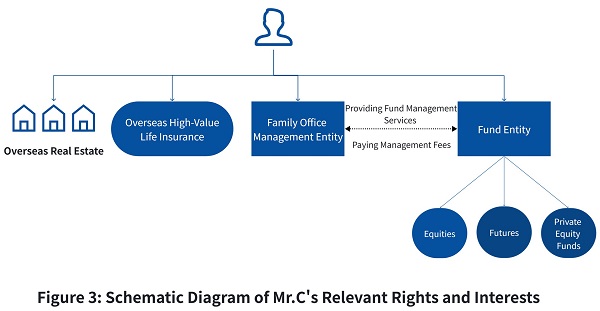
Depending on the relevant facts and circumstances, Mr. C may face the following key tax compliance issues.
I. Dual Tax Residency and Tie-breaker Analysis
Although Mr. C and his spouse have obtained Singapore permanent residency and spend the majority of their time outside China, they continue to maintain significant connections with China, including household registration, residential property ownership, Chinese nationality, and certain economic interests.
As a result, they may potentially be regarded as tax residents of both China and Singapore under their respective domestic tax laws.
In such cases, the determination of tax residency for treaty purposes must follow the tie-breaker rules under the applicable double tax treaty between China and Singapore. These rules generally consider, in sequence, permanent home, centre of vital interests, habitual abode, and nationality.
In practice, the key issue is often not whether an individual holds foreign permanent residency, but whether their centre of vital interests and habitual residence have been effectively relocated.
Where necessary, Mr. C may seek to obtain a tax residency certificate from the relevant tax authorities or initiate the mutual agreement procedure ("MAP") under the applicable tax treaty to resolve potential dual residency issues.
II. Family Office Structures and Look-through Analysis
Mr. C manages his global investment portfolio through a Singapore-based family office structure. However, the establishment of such a structure does not, in itself, alter the ultimate tax obligations of the beneficial owner.
In practice, tax analysis of family office arrangements typically requires a look-through approach to identify the legal and tax characterisation of each entity within the structure, determine the attribution of different types of income, and assess the interaction between multiple tax jurisdictions, tax treaties, and foreign tax credit regimes.
In addition, it is necessary to consider whether offshore holding entities within the structure may be subject to the PRC Controlled Foreign Corporation (CFC) rules, and whether preferential tax regimes such as Singapore's Section 13O or 13U schemes may have any implications for PRC tax treatment.
It is a common misconception that the establishment of a family office structure automatically eliminates CRS reporting obligations. In reality, whether a family office qualifies as a Financial Institution ("FI") under the CRS must be assessed based on its actual business model and activities.
Even where an entity qualifies as an FI, it is still required to carry out due diligence and reporting obligations under the CRS framework. Accordingly, under the CRS 2.0 regime, information relating to the account holder, settlor, beneficiary or controlling person may still be subject to automatic exchange with relevant tax authorities.
In this context, family office structures are expected to remain one of the most complex areas in global tax transparency compliance.
III. Tax Treatment of Offshore Insurance Arrangements
Mr. C has also implemented offshore life insurance policies for himself and his family members, including high-value protection policies.
Under current PRC tax law, the tax treatment of offshore insurance products remains relatively underdeveloped. Key issues such as the characterisation of surrender proceeds, the tax treatment of policy loans, and whether insurance payouts constitute taxable income remain subject to uncertainty.This is particularly relevant for investment-linked insurance ("ILP") a
nd universal life ("UL") products, which combine protection and investment features. The tax characterisation of such products may therefore be more complex and may potentially trigger application of general anti-avoidance principles depending on the specific structure and cash flow arrangements.
IV. Taxation of Offshore Real Estate Income
If Mr. C qualifies as a PRC tax resident, rental income derived from offshore real estate, as well as capital gains arising from the disposal of such property, may be subject to PRC individual income tax.
Although China has not yet joined the OECD-supported Automatic Exchange of Information on Real Estate (IPI MCAA), which is expected to commence information exchange around 2029, this development reflects a broader global trend toward increased transparency in real estate ownership.
From a practical perspective, maintaining complete documentation of acquisition costs, including purchase price, transaction taxes and renovation expenses, is critical for future capital gains tax calculations and potential audit defence.
Key Takeaways for Mr. C
Mr. C's case reflects the tax compliance challenges commonly faced by globally mobile individuals who have relocated overseas while maintaining substantial economic and personal connections with China.
The issues discussed above typically involve the interaction of multiple tax systems, tax treaty provisions, and increasingly sophisticated international tax transparency mechanisms. Whether an individual remains a PRC tax resident, how offshore income should be characterised and attributed, and whether offshore structures give rise to PRC tax liabilities all depend on a detailed analysis of the relevant facts and circumstances.
Accordingly, these issues cannot be determined in abstract terms and must be assessed on a case-by-case basis.
Conclusion
Mr. A, Ms. B and Mr. C represent three typical profiles of Chinese individuals investing overseas today. Although their circumstances differ, they share a common challenge: as global asset allocation becomes increasingly sophisticated, tax compliance has not always received the same level of attention as investment management and wealth succession planning. As international tax transparency continues to deepen and tax enforcement continues to strengthen worldwide, tax compliance is becoming a fundamental element of global asset allocation and wealth succession planning. Looking ahead, successful cross-border wealth planning will depend not only on how assets are structured globally, but also on whether those structures can withstand increasing tax transparency and regulatory scrutiny.
Important Announcement |
|
This Legal Commentary has been prepared for clients and professional associates of Han Kun Law Offices. Whilst every effort has been made to ensure accuracy, no responsibility can be accepted for errors and omissions, however caused. The information contained in this publication should not be relied on as legal advice and should not be regarded as a substitute for detailed advice in individual cases. If you have any questions regarding this publication, please contact: |
|
Han CHEN Tel: +86 10 8525 4683 Email: han.chen@hankunlaw.com |
|
Hao WU Tel: +86 21 6016 9728 Email: hao.wu@hankunlaw.com |
[1] Lianjie Huang has contributions to this article.


